


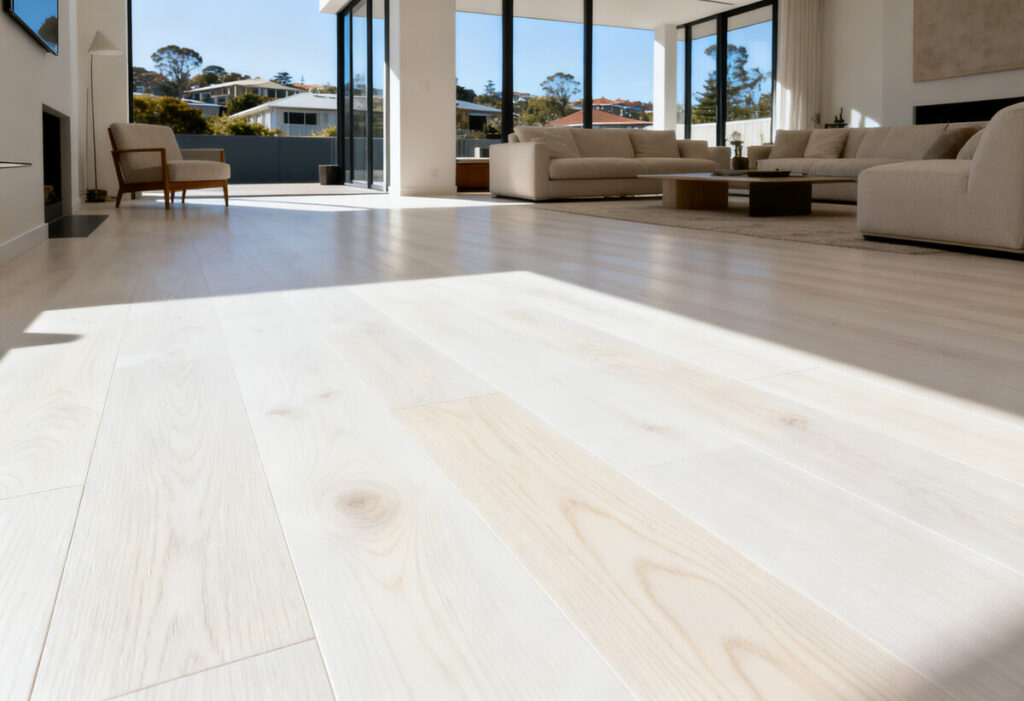
If your timber floors have darkened over time, been stained by water or pet damage, or you simply want a lighter, more contemporary look, bleaching might be exactly what they need. The short answer is yes, timber floors can absolutely be bleached. But there is an important distinction most homeowners do not know about: the bleaching product in your laundry cupboard is not the right tool for the job, and using it on your floors can cause real damage.
Professional timber floor bleaching is a specialist process, and the results look nothing like what a DIY attempt with household bleach would produce. Here is everything you need to know before making a decision.
What does bleaching timber floors actually do?
Timber floors naturally darken with age. UV exposure, foot traffic, wear, and oxidation all gradually shift the colour of the wood, often pulling it towards deeper browns, oranges, or even grey tones depending on the species. Bleaching works by chemically lifting that colour from within the wood fibre itself, resulting in a lighter, fresher tone that better reflects the natural character of the timber.
It is a popular choice for homeowners who want a Scandinavian or coastal aesthetic without the cost of replacing perfectly sound floorboards, for people dealing with stubborn stains that sanding alone will not fix, and for anyone restoring an older home where the floors have aged significantly but still have structural life in them.
Household bleach vs professional timber floor bleaching
This is the most important thing to understand before you consider any DIY approach.
Household bleach (sodium hypochlorite) is formulated to disinfect and remove surface stains from synthetic materials and hard surfaces. When applied to timber, it does not penetrate the wood fibre evenly, often causing blotchy, uneven lightening, and it breaks down the lignin in the wood, which weakens the structure of the board over time. The result is floors that look patchy, feel dry and fragile, and are more likely to crack or splinter after treatment.
Professional timber floor bleaching uses oxalic acid or a two-part wood bleach, both of which are formulated specifically for timber. These products work by neutralising the tannins and oxidised compounds that cause darkening, lifting the colour evenly across the board without compromising the structural integrity of the wood. The process also involves sanding back the existing finish first and applying a new protective coat afterwards, which means the result is both visually transformed and properly protected.
Put simply: household bleach strips colour imprecisely and damages the wood. Professional bleaching lifts colour precisely and leaves the floor in better condition than it found it.
What types of timber floors can be bleached?
Most solid hardwood and softwood floors respond well to professional bleaching, though the degree of lightening varies by species.
- Spotted gum and blackbutt tend to bleach to a warm, pale honey tone.
- Jarrah responds well and can achieve a beautiful bleached red-toned result.
- Pine floorboards bleach readily and can be taken quite light, making them ideal for a coastal or Scandinavian aesthetic.
- Baltic pine and cypress pine also respond well, though the natural variation in these timbers means each board will lighten slightly differently, which can add to the character of the result.
Engineered timber floors are generally not suitable for bleaching, as the veneer layer is too thin to withstand the process. If you have engineered boards, our team can advise on alternative finishing options during a site inspection.
Is timber floor bleaching the same as lime washing or whitewashing?
No, though they are related and are often confused. Understanding the difference will help you decide which result you are actually after.
Bleaching removes colour from within the wood fibre itself. The change happens inside the board, so the grain and texture of the timber remain fully visible, just in a lighter tone. The result looks natural rather than painted.
Lime washing and whitewashing both involve applying a pigmented coating that sits on top of the timber surface. This gives a white or grey tinted effect that allows the grain to show through while adding visible colour. The look is slightly more dressed compared to bleaching.
Some projects combine both techniques: bleaching first to lift the base colour of the timber, then lime washing over the top to add a soft white tone. The combination can produce a very refined, contemporary finish. If you are unsure which approach suits the look you are going for, our team can walk you through both options and show you samples.
What does the professional timber floor bleaching process look like?
Every bleaching job at Revolution Floor Sanding follows the same structured process to ensure an even, lasting result.
- Sand back the existing finish. The current coating and any surface oxidation are removed entirely so the bleaching agent can penetrate the bare timber evenly.
- Apply the bleaching agent. Oxalic acid or two-part bleach is applied carefully and evenly across the floor, then allowed to work through the wood fibre.
- Neutralise. The bleaching agent is neutralised and the floor is allowed to dry fully before any further work is done.
- Assess and fine sand. Once dry, we assess the result and lightly sand to prepare the surface for finishing.
- Apply the protective finish. A quality oil, hardwax, or polyurethane coat is applied to seal the floor and protect the result for years to come.
Most residential bleaching jobs can be completed within two to three days depending on the size of the floor and drying conditions. We always discuss timing with you before starting so there are no surprises.
Frequently asked questions
Can you bleach hardwood floors yourself?
Technically yes, but it is not recommended. The oxalic acid and two-part bleach products used by professionals require careful handling and protective equipment, and applying them unevenly can result in patchy, blotchy results that are expensive to correct. Without the sanding and finishing steps done properly around the bleach application, the floor is also left unprotected. The cost of a professional job is nearly always less than the cost of fixing a DIY attempt.
Can you put bleach on wood floors?
Household bleach (sodium hypochlorite) should not be used on timber floors. It can cause uneven discolouration, raise the grain of the wood, and over time weaken the structural fibres of the board. Professional timber floor bleaching uses entirely different products, specifically formulated for wood, which is why the results are so different.
Can you mop hardwood floors with bleach?
No. Even diluted household bleach will damage the protective finish on your timber floors over time and can permanently discolour the wood underneath. For regular timber floor cleaning, a damp mop with a pH-neutral timber floor cleaner is all you need.
How much does timber floor bleaching cost in Sydney?
Pricing depends on the size of the floor, the timber species, the current condition of the boards, and the type of protective finish applied after bleaching. The best way to get an accurate figure is to get a quote based on your specific floor. Contact us and we will arrange a time to come and take a look.
How long does a bleached timber floor last?
The bleached colour is permanent, built into the wood fibre itself rather than sitting on top as a coating. With a quality protective finish applied over the top and regular maintenance, bleached timber floors hold their look for many years. As with any timber floor, recoating every five to ten years will keep the surface protected and looking its best.
Business Details
- revolutionfloorsanding@gmail.com
- +61406261606
- 55 Pyrmont Bridge Road Pyrmont NSW 2009
Areas We Service
-
Revolution Floor Sanding has completed timber floor bleaching projects across Sydney for over 25 years, from single rooms to whole-home restorations. If you would like to know whether bleaching is the right option for your floors, visit our timber floor bleaching service page for more details, or get in touch directly with Luis and the team on 0406 261 606.